Skip to content

DiffStudy

DiffStudy

  • Home
  • CS Fundamentals
    • Computer Networks
    • Computer Organization
    • Data Structures
    • DBMS
    • Operating System
    • Software Engineering
  • Web Development
    • Web Technology
  • Emerging Technologies
    • Emerging Technologies
    • AI
    • Neural Networks
  • Data Science
    • Data Analytics
    • Data Science
Binary Tree vs Binary Search Tree: Key Differences Explained

Binary Tree vs Binary Search Tree: Key Differences Explained

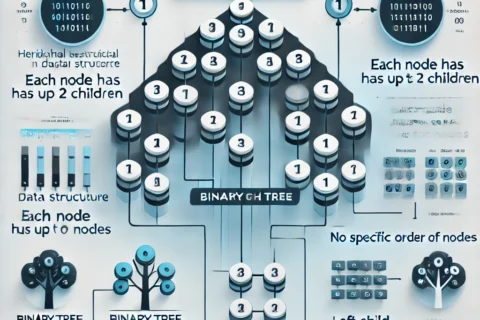
In data structures, binary tree vs binary search tree serve different purposes. A binary tree is a hierarchical structure where each node has up to two children, while a binary search tree organizes data with a specific order to enable…
25 January 2025
1 Comments
Primary Key vs Unique Key: Key Differences

Primary Key vs Unique Key: Key Differences

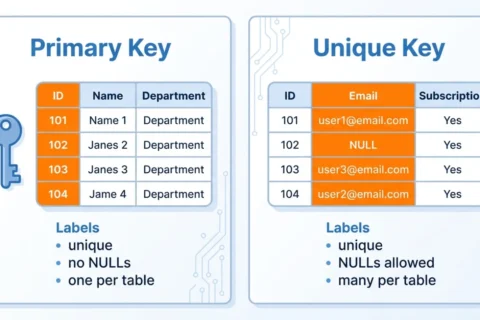
The short answer A primary key uniquely identifies every row, allows no NULLs, and a table has exactly one. A unique key also enforces uniqueness on a column, but it allows NULLs, and a table can have many. So the…

24 January 2025
0 Comments
OSI Model vs TCP/IP Model: Key Differences Explained

OSI Model vs TCP/IP Model: Key Differences Explained

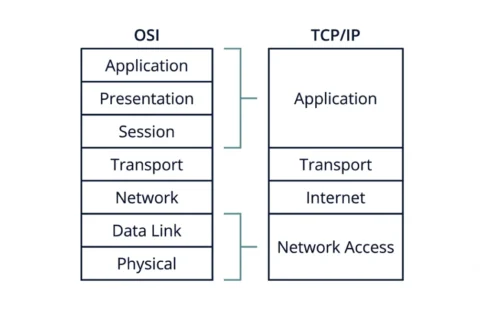
The short answer The OSI model is a seven-layer conceptual framework from ISO that describes how network communication should be organised, so it is mainly a teaching and reference model. The TCP/IP model is a four-layer model from the US…

22 January 2025
2 Comments
Prim’s vs Kruskal’s Algorithm: Key Differences

Prim’s vs Kruskal’s Algorithm: Key Differences

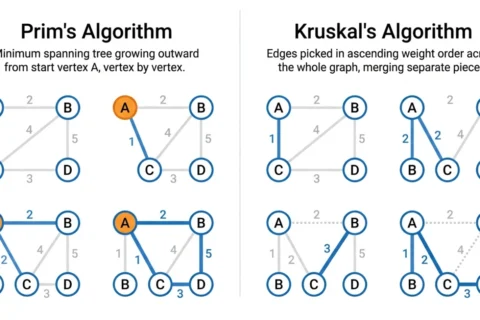
The short answer Both Prim’s and Kruskal’s are greedy algorithms that find the Minimum Spanning Tree of a weighted graph. Prim’s grows one tree from a start vertex, always adding the cheapest edge to a new vertex. Kruskal’s sorts all…

21 January 2025
0 Comments
Mealy vs Moore Machines: Key Differences Explained

Mealy vs Moore Machines: Key Differences Explained

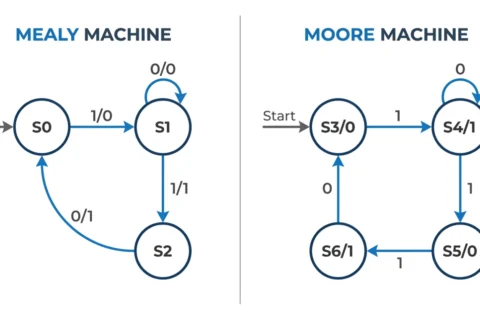
The short answer A Mealy machine produces its output from both the current state and the current input, so the output is written on the transitions and can change the moment the input changes. A Moore machine produces its output…

21 January 2025
0 Comments
Abstraction vs Encapsulation in Java: Key Differences Explained

Abstraction vs Encapsulation in Java: Key Differences Explained

In Java, abstraction vs encapsulation are two core object-oriented programming concepts. Abstraction focuses on hiding complex implementation details, exposing only essential features, while encapsulation bundles data and methods, restricting direct access to an object’s internal state. This guide breaks down…

20 January 2025
0 Comments
Symmetric vs Asymmetric Keys: Key Differences Explained

Symmetric vs Asymmetric Keys: Key Differences Explained

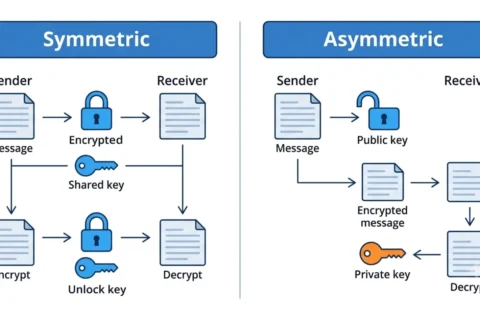
The short answer Symmetric encryption uses one shared secret key for both encrypting and decrypting. Asymmetric encryption uses a pair of keys: a public key to encrypt and a private key to decrypt. So the core of symmetric vs asymmetric…

19 January 2025
0 Comments
DELETE vs TRUNCATE in SQL: Key Differences

DELETE vs TRUNCATE in SQL: Key Differences

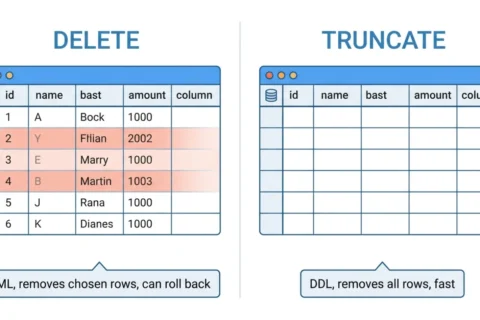
The short answer DELETE is a DML command that removes specific rows using a WHERE clause. It logs each row, so it can be rolled back. TRUNCATE is a DDL command that removes all rows at once, far faster, and…

19 January 2025
0 Comments
Compiler vs Interpreter: Understanding the Key Differences

Compiler vs Interpreter: Understanding the Key Differences

In programming, Compiler vs Interpreter refers to two distinct methods of translating high-level code into machine-readable instructions. A compiler translates the entire code before execution, resulting in faster performance, while an interpreter processes the code line-by-line during execution. Understanding these…

18 January 2025
0 Comments

Posts pagination

1 … 10 11 12 … 23

« Previous Page — Next Page »

Recent Posts

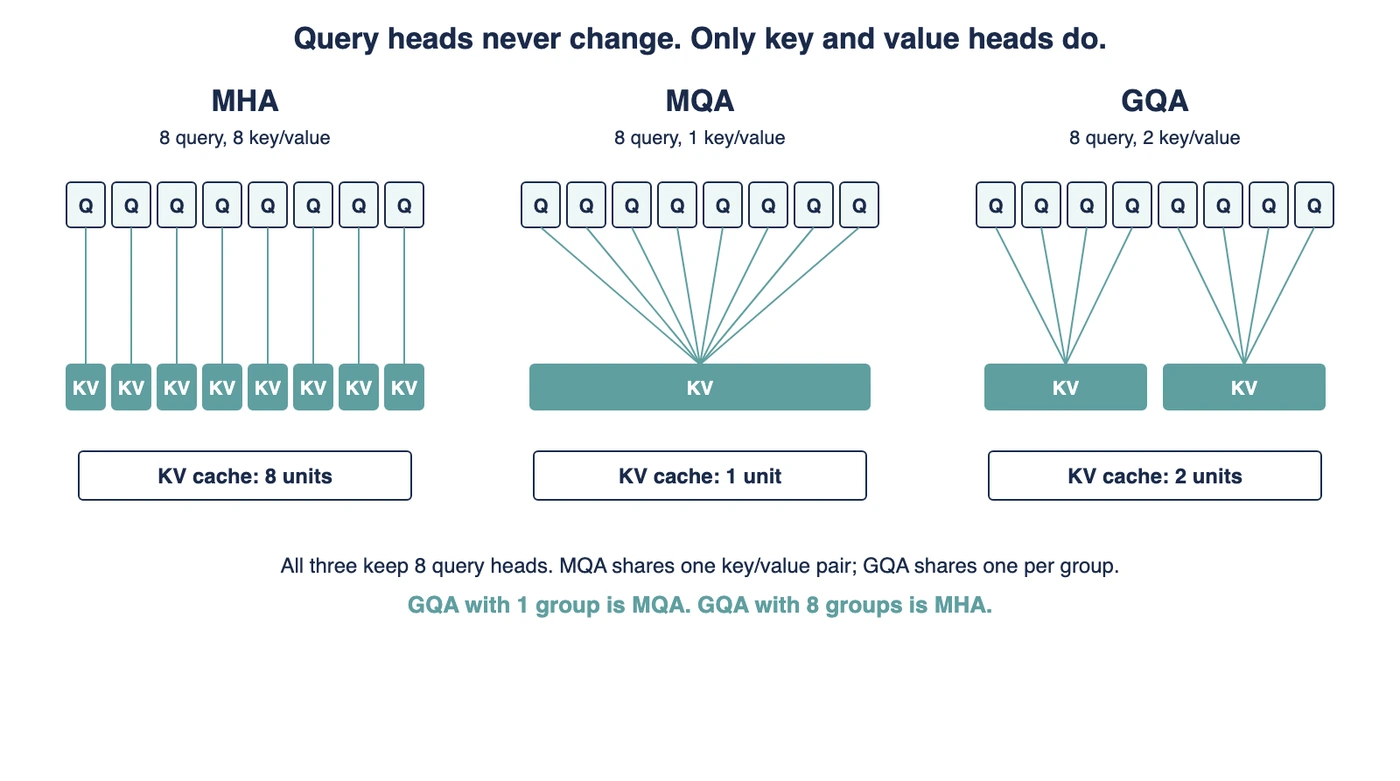
  • MHA vs MQA vs GQA: Key Differences in Attention
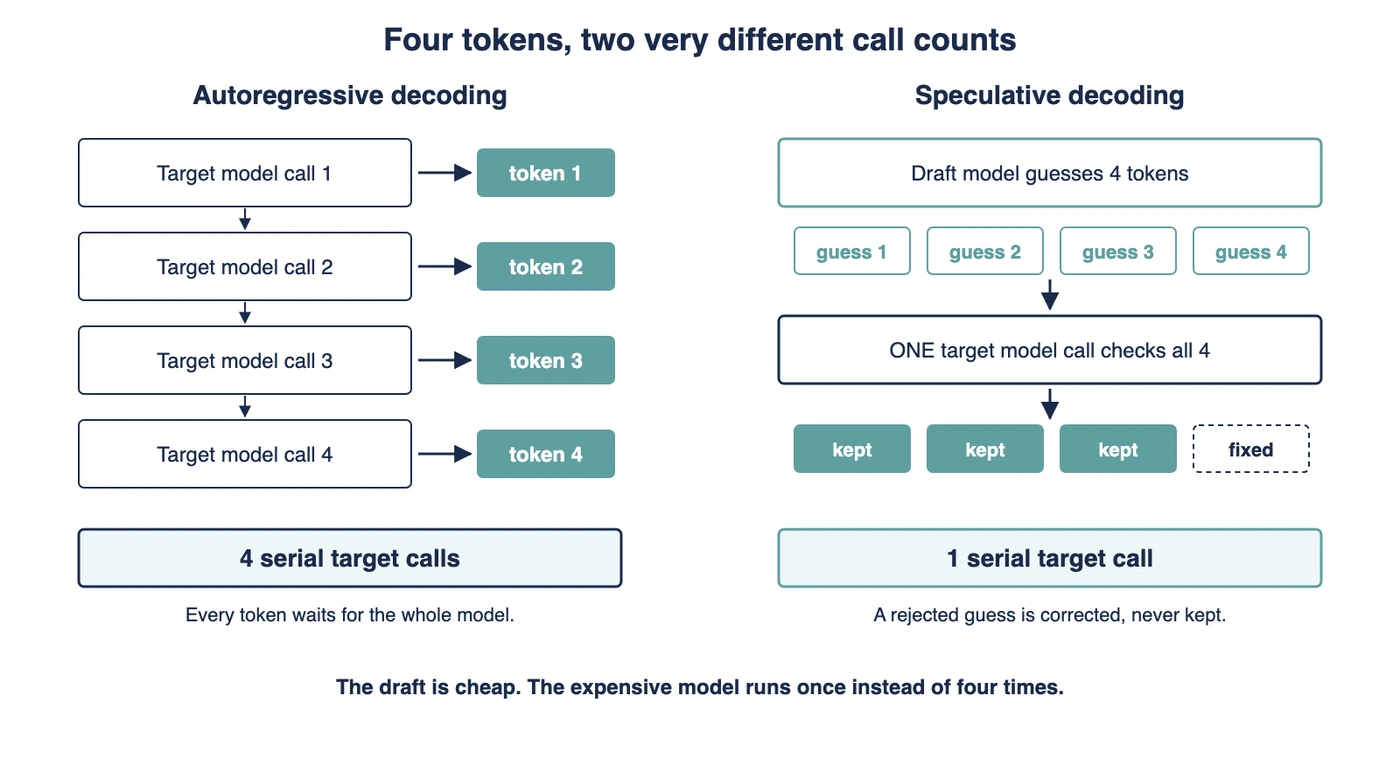
  • Speculative Decoding vs Autoregressive Decoding: Key Differences
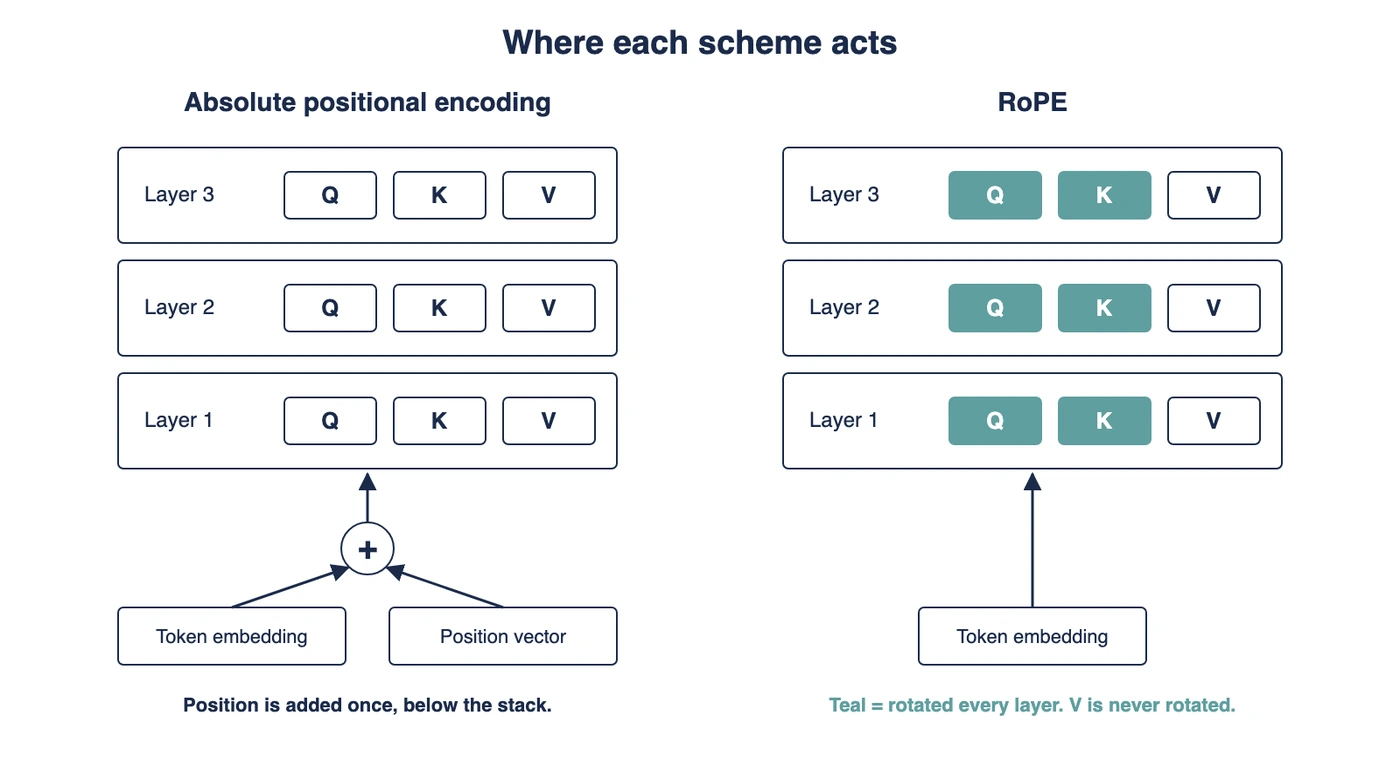
  • RoPE vs Absolute Positional Encoding: Key Differences
  • Encoder vs Decoder: Key Differences
  • Flow Control vs Congestion Control: Key Differences

Categories

  • AI
  • Automata
  • Blog
  • C
  • C Programming Software
  • C++
  • Cloud Services
  • Computer
  • Computer Graphics
  • Computer Networks
  • Computer Organization
  • Computer Programming
  • Cryptography
  • Cybersecurity
  • Data Analytics
  • Data Science
  • Data Structures
  • Databases
  • DBMS
  • Digital Electronics
  • Digital Technology
  • Emerging Technologies
  • Java
  • Latest Technology
  • Neural Networks
  • Operating System
  • Programming
  • Python
  • Software Engineering
  • SQL
  • Web Technology

You Missed

MHA vs MQA vs GQA: Key Differences in Attention
Speculative Decoding vs Autoregressive Decoding: Key Differences
RoPE vs Absolute Positional Encoding: Key Differences
Encoder vs Decoder: Key Differences

DiffStudy

Understand and compare key concepts in tech—from data structures to AI, OS, web technologies, and beyond—with clear explanations at DiffStudy.

Copyright © All rights reserved

  • About Us
  • Privacy Policy
  • Terms & Conditions
  • Contact Us
  • Cookie Policy (EU)
Search