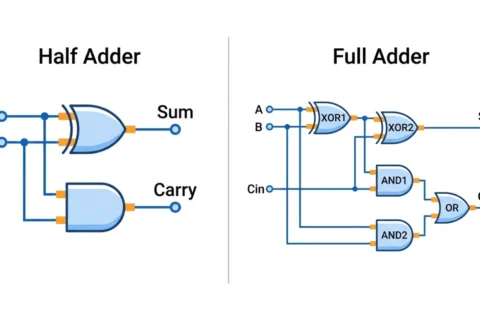
Half Adder vs Full Adder: Key Differences
The short answer A half adder adds two single bits, A and B, and produces a Sum and a Carry, but it ignores any carry from a previous stage. A full adder adds three bits, A, B, and a carry-in,…
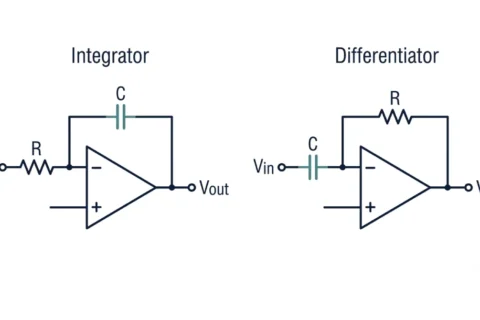
In the realm of digital circuitry, understanding the difference between Integrator and Differentiator is crucial for engineers, enthusiasts, and professionals alike. These components play pivotal roles in shaping the behavior of electronic systems, and in this comprehensive guide, we illuminate…
Introduction In the realm of digital circuits, two heavyweights go head-to-head in a battle for supremacy: the Latch and the Flip Flops. These two fundamental components play a crucial role in sequential logic, but which one holds the key to…
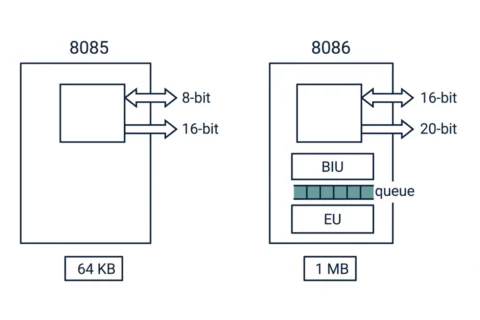
The short answer The 8085 is an 8-bit Intel microprocessor with an 8-bit data bus and a 16-bit address bus, so it reaches 64 KB of memory and runs near 3 MHz. The 8086 is a 16-bit chip with a…
Understanding multiplexer vs demultiplexer is essential in digital communication. A multiplexer selects one input from multiple signals to send through a single output, while a demultiplexer routes a single input to multiple outputs. This guide breaks down their differences and…
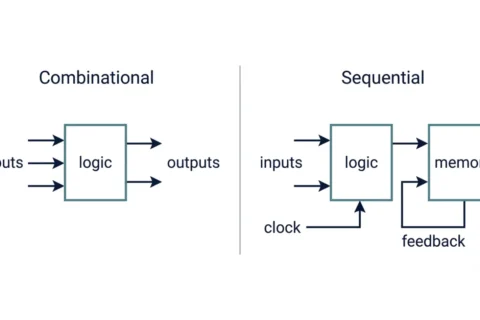
The short answer A combinational circuit produces an output that depends only on the current inputs. So it has no memory, no feedback, and needs no clock. A sequential circuit produces an output that depends on the current inputs and…
You cannot copy content of this page