XML vs HTML | Difference between XML and HTML

In the ever-evolving landscape of web development, understanding the nuances between XML (eXtensible Markup Language) and HTML (HyperText Markup Language) is paramount. These two markup languages serve distinct purposes, and a comprehensive grasp of their differences is crucial for anyone…

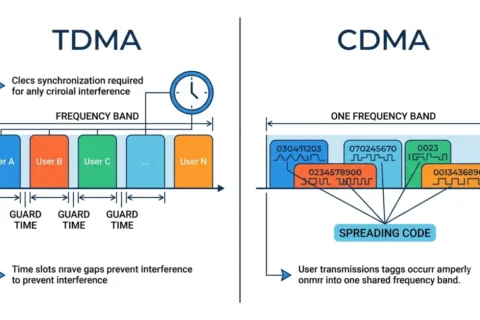
TDMA vs CDMA: Key Differences

The short answer TDMA (Time Division Multiple Access) lets several users share one frequency band, yet each one transmits only in its own assigned time slot, so the system needs tight time synchronization. CDMA (Code Division Multiple Access) lets every…

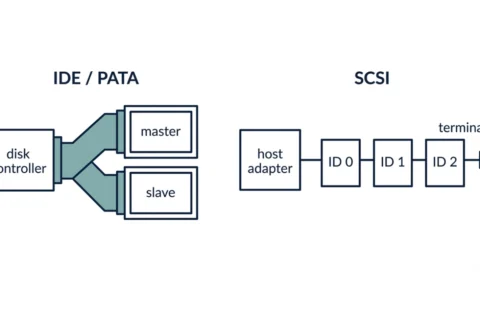
SCSI vs IDE: Key Differences

The short answer SCSI (Small Computer System Interface) and IDE (Integrated Drive Electronics) are both ways to connect storage drives, yet they target different machines. SCSI is the faster, pricier interface that puts many devices (7 or 15) on one…

System vs Application Programming: A Comprehensive Guide

Understanding system programming vs application programming is essential for software development. System programming focuses on creating low-level software like operating systems, while application programming deals with user-facing software like apps and tools. This guide explores their differences, features, and importance…

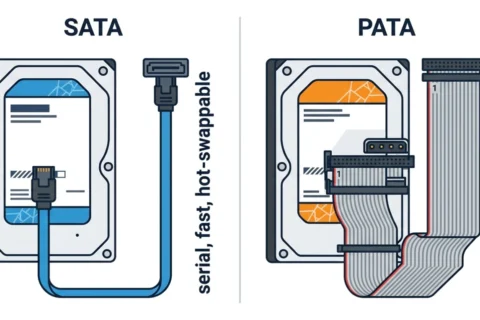
SATA vs PATA: Key Differences

The short answer SATA (Serial ATA) sends data one bit at a time over a thin cable, so it is fast, hot-swappable, and standard in modern computers. PATA (Parallel ATA) sends many bits at once over a wide ribbon cable,…

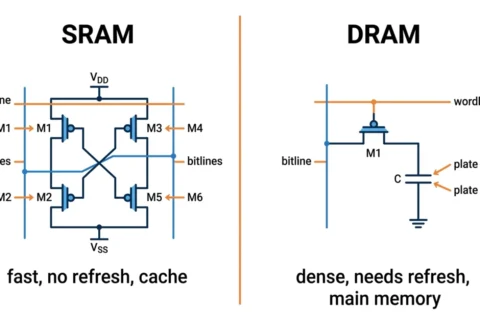
SRAM vs DRAM: Key Differences

The short answer SRAM (Static RAM) and DRAM (Dynamic RAM) are both volatile memories, but they store a bit differently. SRAM holds each bit in a six-transistor flip-flop, so it is fast and needs no refresh, which suits cache memory.…

You cannot copy content of this page