Java vs Python: Which is the Right Language for You?

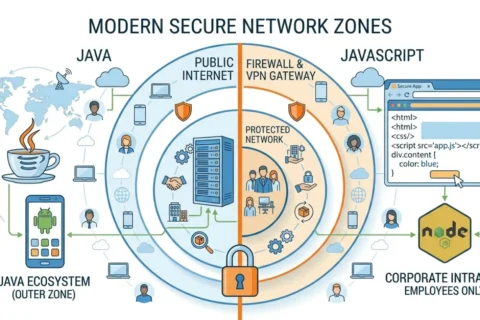
When comparing Java vs Python, it’s essential to understand their strengths and applications. Java excels in performance and scalability, making it ideal for enterprise-level applications, while Python’s simplicity and versatility are perfect for beginners and rapid development. This guide helps…

XML vs HTML | Difference between XML and HTML

In the ever-evolving landscape of web development, understanding the nuances between XML (eXtensible Markup Language) and HTML (HyperText Markup Language) is paramount. These two markup languages serve distinct purposes, and a comprehensive grasp of their differences is crucial for anyone…

TDMA vs CDMA: Key Differences

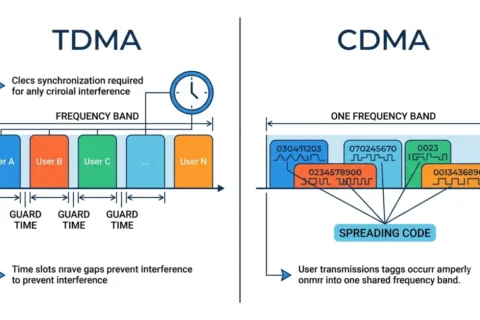
The short answer TDMA (Time Division Multiple Access) lets several users share one frequency band, yet each one transmits only in its own assigned time slot, so the system needs tight time synchronization. CDMA (Code Division Multiple Access) lets every…

SCSI vs IDE: Key Differences

The short answer SCSI (Small Computer System Interface) and IDE (Integrated Drive Electronics) are both ways to connect storage drives, yet they target different machines. SCSI is the faster, pricier interface that puts many devices (7 or 15) on one…

Process vs Thread: Key Differences

The short answer A process is an independent program in execution with its own private address space, memory, and resources, so processes stay isolated and one crashing does not crash the others. A thread is a lightweight unit of execution…

Difference Between Multiprogramming and Multiprocessing

Understanding the difference between multiprogramming and multiprocessing is essential in operating systems. Multiprogramming allows multiple programs to run concurrently by efficiently utilizing CPU time, while multiprocessing involves multiple processors working simultaneously to execute tasks faster. This guide breaks down their…

You cannot copy content of this page